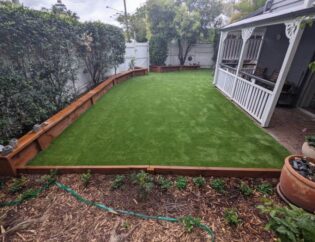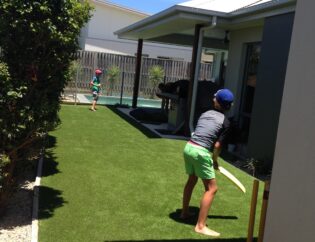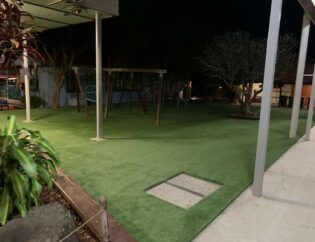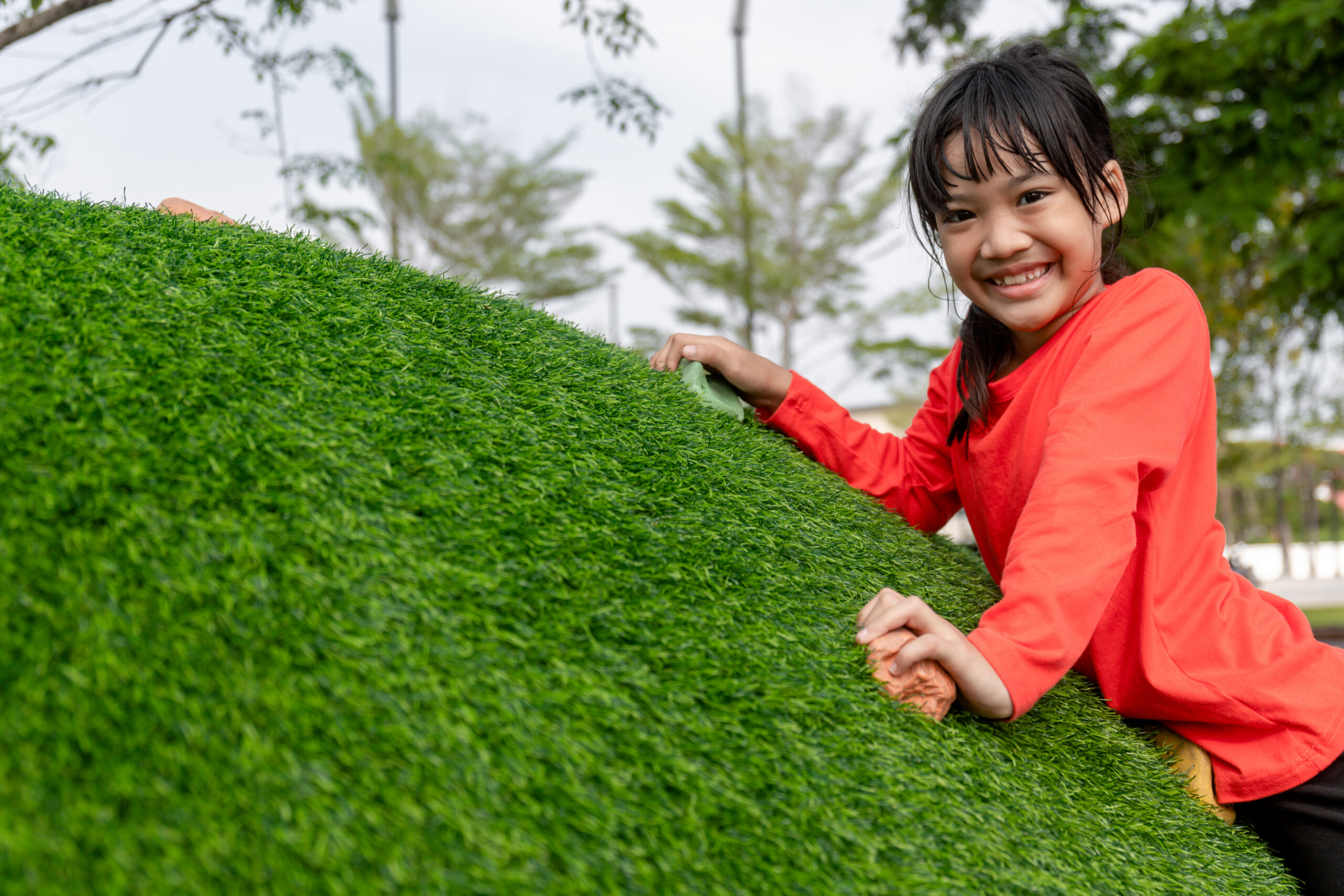
Sloped blocks, uneven ground, and tricky terrain are common across SE Queensland — and one of the questions we hear regularly is whether artificial grass can handle it. The short answer is yes!
Why does artificial grass work better on slopes?
- Artificial grass can be installed successfully on sloped ground, and it’s one of the areas where it genuinely outperforms natural turf.
- Natural grass on a slope is notoriously difficult to maintain — it dries out faster, erodes in heavy rain, and becomes patchy and uneven over time.
- Mowing a slope safely is a real challenge for many homeowners.
- Once installed correctly, artificial turf stays in place, holds its appearance, and requires no mowing regardless of the gradient.
- For Brisbane homeowners on sloped blocks, this is often the most practical long-term solution available.
Not every backyard in Brisbane is flat, and in many cases, artificial turf actually performs better than natural grass on difficult ground. Here’s what you need to know about installing artificial grass on slopes, hills, and uneven surfaces.
How steep is too steep?
There’s no hard limit on gradient, but the steeper the slope, the more important the installation method becomes. On moderate slopes, standard pinning and adhesive techniques are sufficient to keep the turf firmly in place. On steeper gradients, additional fixing methods are used to ensure the turf doesn’t shift or lift over time.
At Turf Green, we assess each site individually before recommending an approach. Gradient, soil type, drainage direction, and how the area will be used all factor into how we prepare and fix the surface. If you’re unsure whether your slope is suitable, the best step is to get us out for a look — our consultations are free and obligation-free.
What about drainage on sloped ground?
Drainage is one of the biggest advantages of artificial grass on slopes. Water naturally moves down a gradient, and quality artificial turf with a perforated backing allows rainfall to drain straight through rather than running across the surface and pooling at the bottom.
Proper base preparation is critical here. At Turf Green, we tailor our sub-base to the specific drainage requirements of each site, accounting for Brisbane’s heavy seasonal rainfall. A well-prepared base on a sloped block manages water efficiently and prevents the waterlogging and erosion that natural grass on slopes is prone to.
Can artificial grass fix an uneven lawn?
This is one of the most common reasons Brisbane homeowners come to us. Lawns that have become uneven over time — through tree root activity, soil movement, compaction, or simply years of wear — are difficult and expensive to restore with natural grass. The ground needs significant reworking, and even then natural turf can become uneven again within a season or two.
Artificial grass installation includes a ground preparation phase that addresses unevenness directly. We level and compact the sub-base before laying the turf, creating a smooth, consistent surface that stays that way long-term. For many homeowners, it’s the first time their backyard has felt truly level and usable.
What base preparation does a sloped or uneven area need?
The base is where the real work happens on any difficult site. A properly prepared base for artificial grass on a slope or uneven ground typically involves excavating the existing surface to a consistent depth, grading the sub-base to manage drainage effectively, compacting a layer of crusher dust or road base to create a firm and level foundation, and then laying the turf over the prepared surface with appropriate fixing for the gradient involved.
Cutting corners on base preparation is the most common reason artificial grass installations underperform on difficult ground. It’s why the experience and process of your installer matters as much as the product you choose. Take a look at our project portfolio to see the range of sites and conditions we’ve worked with across SE Queensland.
Are there areas where artificial grass on slopes works especially well?
Several site types come up regularly in our work across Brisbane and SE Queensland.
Embankments and retaining wall surrounds are a classic example. The area between a retaining wall and a fence line is often too narrow and sloped to maintain with natural grass, but artificial turf handles it easily and keeps the space looking clean year-round.
Side passages on sloped blocks are another. These areas rarely get enough sun for natural grass to thrive, and the gradient makes mowing impractical. Artificial grass solves both problems at once.
Front yards on hilly blocks in areas like the Redlands, Toowoomba foothills, and parts of the Gold Coast hinterland are also well suited. The combination of slope, sun exposure, and high visibility makes artificial grass a practical and attractive solution.
Pool areas on sloped ground benefit as well. Natural grass near pools on uneven terrain creates mud, erosion, and debris in the water. Artificial grass around a pool on a sloped block stays clean, drains efficiently, and looks far better in the long run. Learn more on our artificial grass around pools page.
Does the type of artificial grass matter for slopes?
Product selection does matter, though gradient alone isn’t the deciding factor. For sloped areas that will see high foot traffic, a product with a shorter pile height and firmer feel underfoot tends to perform better. For decorative or low-traffic slopes, a softer, longer pile can work well.
Work With Us
We’ll recommend the right product for your specific site when we visit. Browse our range of grass types to get a sense of what’s available, and use our grass cost calculator for an early indication of budget.
Frequently asked questions
Will artificial grass slide or move on a slope? Not when installed correctly. Proper pinning, adhesive joining, and in some cases additional fixing methods ensure the turf stays firmly in place on gradients. This is a standard part of our installation process on any sloped site.
Does artificial grass help with erosion on slopes? Yes. By covering the soil surface and allowing water to drain through rather than run across the surface, artificial grass significantly reduces erosion compared to bare ground or struggling natural grass.
Can I install artificial grass on a slope myself? Sloped and uneven ground is one of the more technically demanding installation scenarios. DIY is possible on gentle gradients, but for anything significant we’d recommend professional installation to ensure the base preparation and fixing are done right. A poor installation on a slope is much harder to correct after the fact.
How do I get started? The easiest first step is to get in touch with the Turf Green team for a free site consultation. We’ll assess your slope, discuss the options, and give you a clear quote based on what your specific site needs. We service Brisbane, the Gold Coast, Sunshine Coast, Redlands, Logan, Ipswich, and Toowoomba.
You can also learn more about our artificial grass installation service or read about how little maintenance artificial grass needs once it’s in place.