Many Brisbane homeowners are surprised by how much outdated information still circulates about synthetic turf.
Thinking about installing artificial grass but unsure if it’s right for you? At Turf Green, we’ve heard it all and we’re here to set the record straight.
If you’ve been holding off because of one of the common myths we’re discussing in this blog post, it’s time to take a fresh look. With more than 20 years of experience across Brisbane, Logan, and Redlands, Turf Green can help you choose the right product and ensure a smooth installation.
How do you make sure artificial grass will perform well in your Brisbane garden?
- Despite our humid, stormy climate, artificial grass works perfectly when you have experts install it with meticulous base preparation, including effective drainage.
- If you’re worried about maintenance, artificial grass needs far less than natural grass.
- Semi-regular brushing to remove debris and rinsing with the hose is all the cleaning it should require.
- Working with a trusted provider and installer like Turf Green means your grass will look and feel natural.
- Beautiful colouring and soft comfort are readily available with modern artificial grass.
What are 5 common artificial grass myths, and what are the facts that debunk them?
1. Doesn’t Artificial Grass Look Fake?
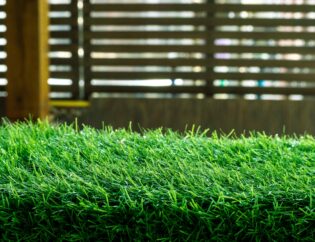
This is one of the biggest myths we hear. In the past, synthetic turf had a plastic, glossy appearance. But today’s options look and feel much more natural.
Modern turf products feature blended yarn colours, multi-length fibres, and realistic textures that closely mimic the look of real grass, especially when installed by experts like the Turf Green team.
Explore our Artificial Grass page to see examples.
2. Won’t it Get Too Hot in Brisbane’s Sun?
It’s true that synthetic turf can warm up under direct sunlight. However, it doesn’t get any hotter than concrete or decking.
We also offer UV-stabilised, heat-resistant turf and optional infill products designed to reduce heat. With a bit of shade or a quick hose-down, the surface cools rapidly, making it safe for pets and children.
3. Isn’t it Bad for the Environment?
Artificial turf actually reduces water usage, eliminates fertiliser runoff, and cuts down on mower emissions. For eco-conscious households, this can be a smart move.
While it’s not biodegradable, high-quality turf lasts over a decade, making it a low-impact alternative to a thirsty, chemical-dependent lawn.
4. Won’t Drainage Be a Problem?
Many assume that synthetic turf won’t drain well, but that’s not the case. When properly installed, artificial turf includes a porous base layer and drainage holes that allow water to pass through efficiently. At Turf Green, we tailor our drainage approach to Brisbane’s soil and stormwater conditions for every job.
5. Isn’t it Just for Sports Fields or Playgrounds?
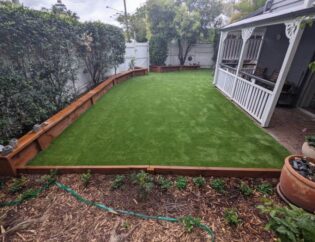
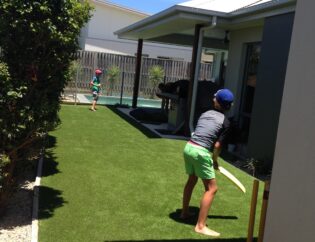
While turf is popular in schools and sporting facilities, it’s also a practical and attractive option for residential backyards, courtyards, and even rooftops. Whether you’re creating a pet-friendly space or a stylish, low-maintenance garden, artificial grass fits a wide range of home projects.
Ready to Talk Turf?
Visit our Installation page or Contact Us for a free quote.
Frequently Asked Questions
Is fake grass bad for kids and pets?
Not at all. High-quality turf is non-toxic, lead-free, and hypoallergenic, making it ideal for play areas. For pets, modern installations utilise odour-absorbing infills and highly permeable backings so that urine washes through without lingering smells.
Does it need a lot of work to stop it flattening out?
Routine brushing and occasionally redistributing the sand infill are the main tasks, and they aren’t needed often. A properly installed, high-quality lawn will bounce back easily.
Does artificial grass come in natural colours?
Yes, modern artificial grass comes in a variety of natural multi-tonal colours. Premium turf mixes different shades – such as olive green, lime green, and emerald – with a brown or tan thatch layer at the base to mimic the appearance of a living lawn.
What are the ways artificial grass has modernised over time?
Artificial grass has evolved from the shiny, abrasive green carpet of the 1960s into hyper-realistic, durable landscaping. Modern synthetic turf achieves this through advanced polymers, integrated cooling yarns, multi-tone colouration, and highly permeable backings.