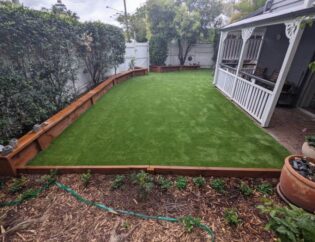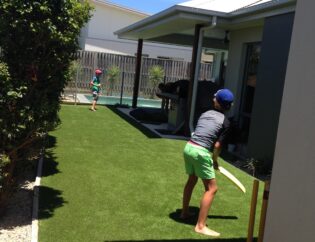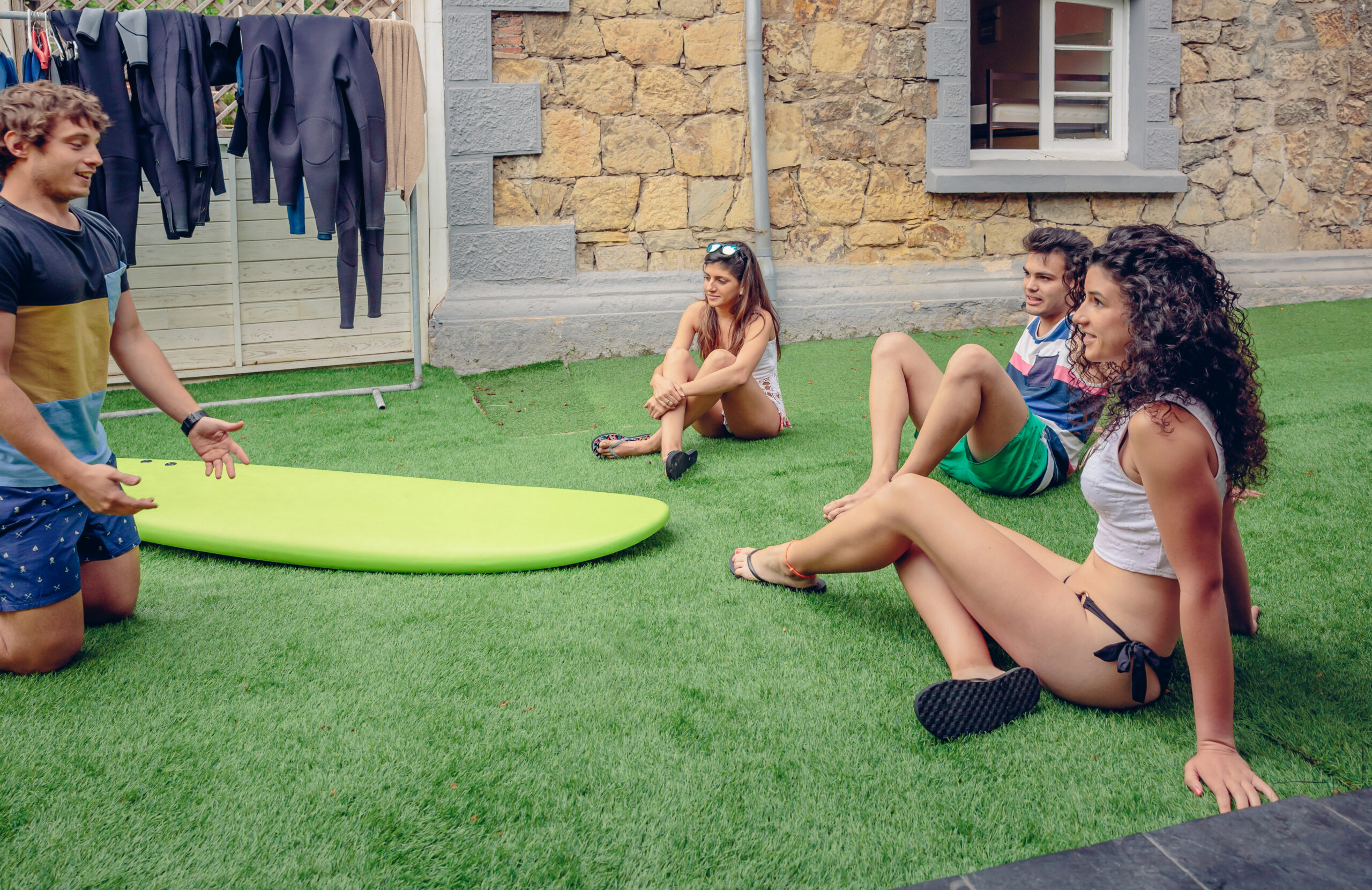
Short answer: The difference between an artificial lawn that still looks good in year fifteen and one that fails by year three is almost all underneath. The turf you see on quote day is only part of the job. Base preparation, drainage, the way the joins are made and the right infill are what keep a lawn flat, draining and green over time. A cheap quote usually saves its money by cutting those corners, and that saving is exactly what shows up around year three.
Two artificial lawns can look identical the day they go in. Three years later one is still flat and green. The other has seams starting to lift and a puddle that sits after every storm. The turf itself is rarely the reason. What separates them is the work that happens below the surface, the part you can’t see on quote day and can’t easily fix later.
What fails first on a cheap install?
Usually the joins and the base. Seams that weren’t glued and secured properly start to lift and show, especially in heat. Ground that wasn’t compacted and levelled develops dips and soft spots that turn into puddles. The pile flattens in the walked-on areas and never quite stands back up. None of this is bad luck. It traces back to how the lawn was prepared before the turf went down.
Why does the base decide everything?
Because everything above it depends on it. A lawn is only as flat, stable and free-draining as the base built underneath it. Proper preparation means excavating to the right depth, compacting the ground so it won’t shift, setting the levels and the fall, and laying a drainage layer that moves water away. Rush any of that and the surface will tell on it within a few seasons. This is the step a cheap quote trims first, because it’s the part the customer can’t see.
What goes wrong with the joins?
Joins are where a lot of cheap installs give themselves away. Done well, a seam is invisible and stays flat for years. Done quickly, it lifts at the edges, peaks in the heat and becomes both a trip point and an eyesore. Good jointing takes time and the right materials, and that’s part of what you’re paying for in a proper quote.
Why does drainage matter so much in Brisbane?
Our summers are wet, and the water has to go somewhere. A lawn built over a proper drainage base clears quickly after a storm and is usable again soon after. One laid over poorly prepared ground holds water, stays soggy, and for pet owners it starts to smell. You can’t see drainage on a finished lawn, so it’s one of the first things to ask about before you sign anything.
Does the turf itself matter too?
It does, just not on its own. A quality, UV-stable turf holds its colour and resists flattening better than a thin budget product. But even the best turf fails early if it’s laid over a poor base, and a mid-range turf laid properly will outlast a premium one laid badly. The turf and the installation have to be right together, which is why comparing quotes on turf price alone can mislead you. If you’d like the fuller picture, our artificial grass page walks through the options.
How do you tell a good quote from a cheap one?
Ask what happens under the grass. A good quote spells out the base preparation, the drainage, how the joins are handled and what turf is being used, and it comes from someone who can point to jobs still standing years later. Turf Green has been installing since 2011 and came out of professional turf management, so the work below the surface is where the business started. If a quote is noticeably cheaper and vague about the base, that gap is usually the base itself.
If you’re comparing quotes and want to know what should be happening under your lawn, the Turf Green team is happy to walk you through it and give you an honest, itemised quote.