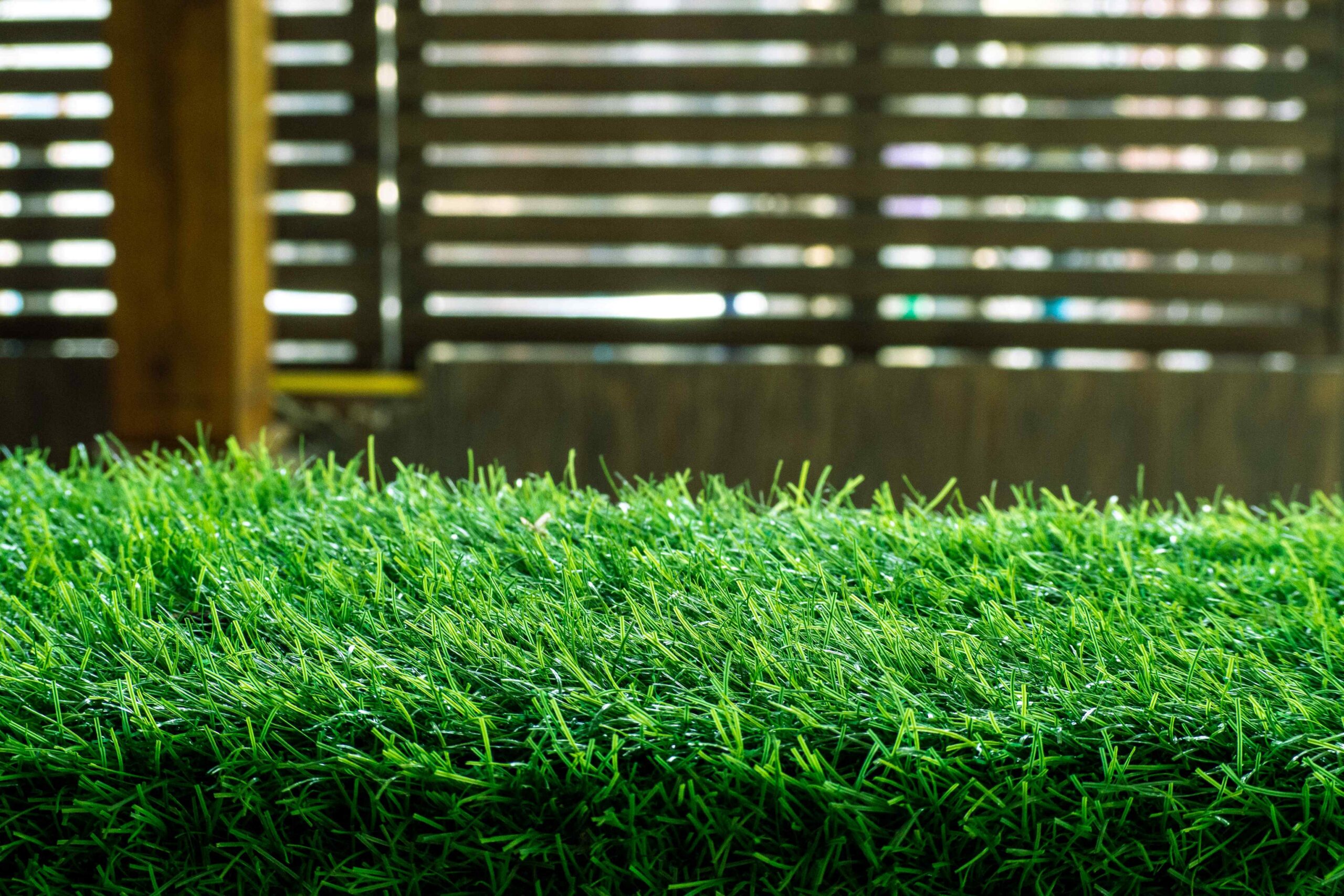
Short answer: The best artificial grass for Queensland’s climate is a UV-stabilised polyethylene product with a drainage rate of at least 30 litres per square metre per hour, a pile height between 30mm and 40mm, and silica sand or organic infill laid over a properly compacted crusher dust base. The product matters. So does who installs it and how well they understand SE Queensland’s soil, rainfall, and heat.
Queensland’s climate is genuinely unlike most of the country. Intense UV, subtropical humidity, sudden heavy rainfall, and months of dry heat put outdoor surfaces through conditions that expose the difference between a quality product and a cheap one faster than almost anywhere else. Getting the right artificial grass for these conditions means understanding what each specification actually means on the ground, not just on a datasheet.
Spring is here and summer is coming up fast. Now is the right time to make a decision.
Why Queensland demands more from artificial grass
Most artificial grass specifications are written for a generic Australian climate. Queensland is not generic. SE Queensland homeowners deal with sustained UV exposure, temperatures regularly above 30 degrees, tropical rainfall that can deliver 50mm or more in an hour, and high humidity that encourages mould and bacteria. A product that performs adequately in Melbourne or Adelaide may fade prematurely, drain poorly, or sit uncomfortably hot underfoot in Brisbane. Getting across the key specifications is where any good decision starts.
UV stabilisation
This is the specification that matters most for Queensland. Queensland’s UV index regularly hits extreme levels, among the highest recorded anywhere in the world, and unprotected synthetic fibres will fade and stiffen well before their rated lifespan.
Quality artificial grass for Queensland should be manufactured with UV inhibitors built into the yarn itself. A surface coating wears away. Inhibitors built into the fibre structure protect the product throughout its life. When looking at any product, ask for the UV stabilisation rating and the manufacturer’s warranty against colour fade. A supplier confident in their product will answer that question clearly.
At Turf Green, we only supply and install products we’re confident will hold up in SE Queensland’s conditions. Browse our range of artificial grass products to see what we work with.
Drainage rate
Queensland’s summer wet season is not gentle. Rainfall events can be rapid and heavy, and a surface that drains slowly will pool water, become slippery, and undermine the sub-base over time. A drainage rate of at least 30 litres per square metre per hour through the turf’s perforated backing is the minimum worth considering. Some quality products drain significantly faster, which matters for areas with high rainfall exposure or concrete beneath the turf.
But the turf itself is only part of the drainage picture. The sub-base must be graded correctly to direct water away from structures and compacted firmly enough to hold that grade across years of use and rainfall. Poor sub-base preparation is the most common cause of drainage problems on otherwise good-quality installations. At Turf Green, our base preparation is tailored to each site’s specific soil type, gradient, and drainage context.
Pile height
Pile height is the length of the synthetic fibres, and it affects appearance, comfort, heat retention, and drainage speed. For most Queensland residential applications, 30mm to 40mm is the practical range.
Shorter piles around 20mm to 25mm drain faster, stay cooler, and suit high-traffic areas or sports surfaces well. They look less naturalistic but perform reliably in full sun. Piles in the 30mm to 35mm range give a realistic appearance without the heat retention of longer fibres, and this is the most common choice for Brisbane family backyards, pool surrounds, and entertaining areas. Longer piles of 40mm and above look lush and feel good underfoot. In shaded or partially shaded positions they work very well. In full Queensland sun, longer fibres can hold more heat, which a good infill choice and occasional hosing will manage, but it’s worth factoring into the product conversation.
Heat management
Heat is the question we hear most from Queensland homeowners. Yes, artificial grass absorbs heat in direct sunlight. So does every outdoor surface, concrete, paving, timber decking, and natural grass in dry conditions.
The real question is how manageable that heat is day to day. Infill choice has a measurable effect on surface temperature. Silica sand stays cooler than crumb rubber in high-temperature environments. Organic infills like cork and coconut husk perform even better thermally and are naturally antimicrobial, which matters in Queensland’s humidity. A hose-down cools the surface within minutes. And shade, from a sail shade, a pergola, or established trees, makes the biggest practical difference of all. When we consult with clients, we always talk through the shade profile of the space as part of the product and infill recommendation.
Yarn type and fibre quality
The yarn artificial grass fibres are made from affects both appearance and how the product holds up in Queensland conditions. Polyethylene is the preferred material for residential applications. It’s soft underfoot, UV-resistant, and holds its colour and texture better than polypropylene alternatives under sustained heat and sun exposure.
Monofilament yarns, individual solid fibres, hold their shape and stand upright better over time than slit-film yarns, which can flatten under heavy traffic or heat. For Queensland conditions, a monofilament or blended yarn product is worth prioritising. Fibre density matters too. A denser product handles foot traffic better and keeps its appearance longer. Pile height alone tells you very little. A well-constructed 30mm product will outperform a low-density 40mm product in the same position.
Why spring is the right time to act
Ground conditions in spring are stable. After summer’s wet season, soils can be waterlogged and slow to work with. Spring installations are faster and cleaner, and your surface will be fully settled before the peak entertaining season arrives, before the school holidays, the Christmas gatherings, and the long hot days when your backyard sees the most use.
Natural grass that has come through winter often heads into spring looking patchy and stressed. That lawn heading into October tends to get worse through the dry stretch before the wet season returns. Installing now means you go into summer with a surface that stays green and usable regardless of what the season brings. Lead times for quality installations also extend as summer approaches, so booking in spring puts you ahead of that. Use our grass cost calculator to get an early sense of your project, or get in touch directly for a free site visit.
Why installation matters as much as the product
The best artificial grass product available will underperform if it goes down incorrectly. In Queensland’s conditions, where drainage demands are real and the surface needs to last a decade or more, the installation standard matters as much as the product specification.
The things that make a difference are proper excavation to a consistent depth, a crusher dust or road base layer compacted to a firm and level finish, correct grading for drainage away from structures, quality joining and pinning to keep edges in place, and appropriate infill for the product and use. These are standard practice at Turf Green on every job, whether it’s a small courtyard or a large commercial site. Our team brings over 20 years of experience working with turf in Queensland conditions. Learn more about our installation service and what maintenance looks like once your turf is in.
Free quotes across SE Queensland
Turf Green provides free site consultations and quotes across Brisbane, the Redlands, Bayside, Logan, Ipswich, the Gold Coast, the Sunshine Coast, and Toowoomba. Whether you’re a homeowner planning a backyard upgrade, a landlord improving an investment property, a school or childcare centre needing a compliant play surface, or a commercial operator after a durable ground solution, we’ll assess your site and recommend the right product and installation approach for your specific conditions.
For childcare and school installations, visit our artificial grass for childcare centres and synthetic grass for playgrounds pages. For pool surrounds, see our guide to artificial grass around pools. For homeowners weighing up the numbers, our Queensland cost guide is a good starting point.
Contact Turf Green to arrange your free consultation, or call us on (07) 3823 2003 Monday to Friday, 8:30am to 4pm.